專題:《聯合國防治荒漠化公約》第十七次締約方大會
新浪財經ESG評級中心提供包括資訊、報告、培訓、諮詢等在內的14項ESG服務,助力上市公司傳播ESG理念,提升ESG可持續發展表現。點擊查看【ESG評級中心服務手冊】
新浪財經 蔣露瑤/發自烏蘭巴托
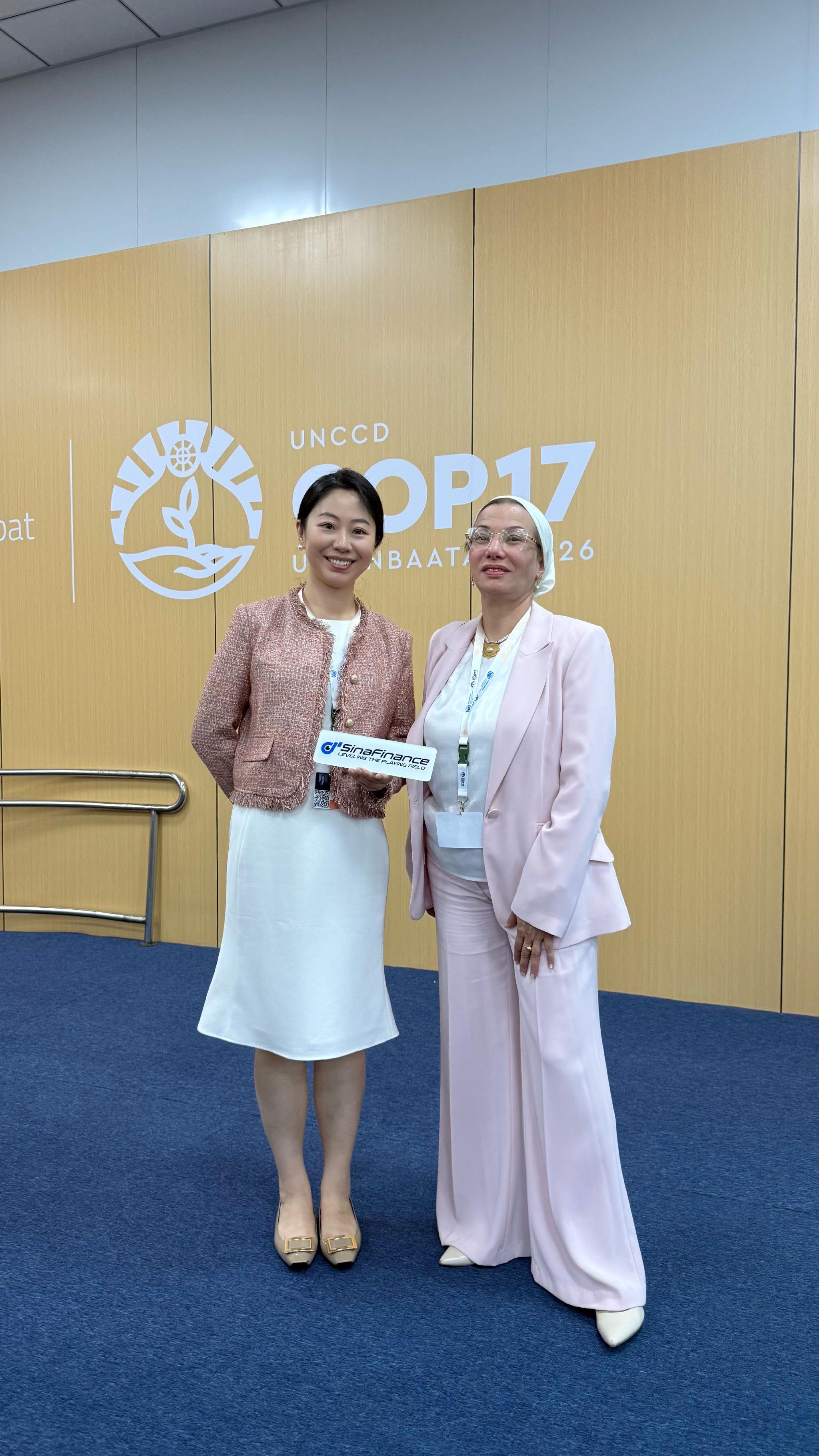
《聯合國防治荒漠化公約》第十七屆締約方大會(COP17)於8月17日至28日在蒙古烏蘭巴托舉行。大會期間,聯合國副祕書長、《聯合國防治荒漠化公約》祕書處執行祕書亞絲明·福阿德(Dr. Yasmine Fouad)對話新浪財經時指出,國家有邊界,生態系統沒有邊界,應對土地荒漠化需要跨國、跨部門協作。而衡量COP17成敗的標準,不是新通過了多少決議,而是土地有沒有變好、人民有沒有受益。
土地修復資金缺口每年2780億美元,私人資本僅佔6%
大規模調動資金對於應對土地退化、增強抗旱韌性和推進可持續土地管理至關重要,然而當前土地恢復與抗旱韌性面臨的孖展缺口依然巨大。
根據UNCCD此前發布的孖展需求評估,2025年至2030年,全球土地恢復與抗旱韌性領域每年約需投入3550億美元,但當前年度資金流僅約770億美元,年孖展缺口高達2780億美元。大規模土地恢復每天需投入約10億美元,但私人資本目前卻僅佔全球土地恢復孖展的約6%。
福阿德坦言:「當今最大的障礙,不是科學或方案跟不上,而是資金無法以所需的規模和速度到位。」她指出,難點不光是要募集更多錢,更關鍵的是要讓土地恢復變得可投資、低風險,「我們正在努力打造一條更順暢的鏈條:從國家戰略重點出發,形成具體項目;由項目引向投資;再由投資落到實地,產生可衡量的成效。」
福阿德強調,從經濟賬來看,投資土地恢復的理由也十分充分:「每向土地恢復投入1美元,就能帶來7到30美元的回報,包括生態服務價值和避免的損失。眼下要做的,是把健康土地帶來的種種好處,比如水安全、生物多樣性、穩固的生計,轉化成金融機構願意支持的投資機會。」
公共資金無法填平資金缺口,需引入私人和機構資本
她認為,光靠公共資金填不平資金缺口。公共資金要巧用,要能降低風險,引入私人資本和機構資本。「混合孖展、擔保和其他風險分擔工具可以提高土地恢復項目的可孖展性,可以讓恢復項目更容易獲得孖展,從而吸引大規模投資。公共資金和優惠資金可以發揮「藥引子」作用,承擔前期部分風險,讓更大體量的資本敢跟進來。同時,政策、補貼和激勵機制也得向可持續土地管理和抗旱韌性看齊。」
福阿德指出,土地恢復還需要更強大的投資可落地項目儲備庫,並輔以可預測的政策、可靠的數據和可信的監測。「牧場旗艦倡議」(Rangelands Flagship Initiative)是一個例子,起步規模就超過10億美元,專注於打造一批投資條件成熟的牧場項目。截至目前,該倡議已彙集45個明確項目,估值約12億美元。全球環境基金(GEF)通過向UNCCD COP17遺產項目投資330萬美元,為牧場旗艦倡議的協調提供支持。
福阿德介紹,同樣的邏輯適用於抗旱韌性建設。通過「抗旱韌性投資機制」(Drought Resilience Investment Facility)等工具,催化性資金和優惠資金可以降低風險,在乾旱還沒釀成危機之前,就把私人投資引入到預防工作中來。該機制由UNCCD與盧森堡政府共同發起,旨在調動約4億美元,投資於可持續農業、水資源獲取和基於自然的解決方案。
「私營部門也有自己的經濟賬要算,」福阿德表示,「土地退化和乾旱直接威脅供應鏈、原材料、水源供給和業務連續性。UNCCD通過「商業促土地(Business4Land)」倡議,致力於將土地和乾旱議題納入企業的戰略、投資和報告,讓土地恢復從細分的環境議題,變成主流的投資考量。
「商業促土地(Business4Land)」倡議是UNCCD官方倡議,旨在促進私營部門參與,加強企業、投資者、政府和國際組織之間的合作。COP17期間,UNCCD與蒙古國商業委員會簽署諒解備忘錄,正式建立Business4Land蒙古樞紐。
「政策指明方向,金融提供手段,夥伴關係賦予能力,私營部門參與則幫我們上規模,」福阿德說,「這些不是孤立的,它們合在一起,就構成了一個正在成形的落實架構」。
沙塵暴影響超150國,源頭防控纔是治本之策
沙塵暴是跨越國界的挑戰,波及超過150個國家。其影響遠超沙源地,會危害人體健康,衝擊農業、交通和基礎設施,擾亂經濟活動和民生。福阿德強調,沙塵暴不僅是一個環境問題,同時也是一個發展、衛生和經濟問題。
同時她指出,沙塵是地球系統中天然且必要的一環,能把養分輸送到各大洲和海洋,滋養陸地和海洋生態系統——比如撒哈拉的沙塵,就把磷元素帶過大西洋,為亞馬遜雨林補充養分。「我們的目標不是消滅沙塵,而是降低嚴重沙塵暴的風險和破壞力,尤其是那些因土地退化、不可持續的水土管理而加劇的沙塵排放」。
福阿德表示,這就凸顯了基於生態系統的源頭控制的意義:「恢復退化土地、保護土壤和植被、改良水土管理方式、增強生態系統抵禦乾旱和風蝕的能力,都有助於從源頭減少沙塵排放。這些措施還能帶來額外的好處:涵養生物多樣性、保障糧食安全和水安全、改善民生。」
監測和預警也必不可少,但關鍵是要把它們轉化成預防和實地行動。「更精準的數據能幫我們找準退化和沙塵源區,提高預報準確性,也能告訴我們哪裏最急需恢復、可持續管理和抗旱準備」。
由於沙塵暴跨越國界,區域合作就格外重要。各國需要共享監測和預報信息、協調預警系統、加強科技合作。福阿德說:「區域層面的行動,可以把土地恢復、監測、預警和準備工作串聯起來,而不是各管一攤」。
在全球層面,合作需要匯聚政府、科學家、國際組織、金融機構、私營部門和當地社區。聯合國沙塵暴防治聯盟就是一個重要平台,能匯聚各方專長,幫助各國強化預防、準備和提升韌性。
「沒有一個國家或機構能獨自應對這種規模的跨界風險。實施架構必須既跨邊界,也跨部門。道理很簡單:國家有邊界,但生態系統沒有。減輕沙塵暴風險,既要在源頭對脆弱土地採取行動,也要跨越國界攜手合作,預判風險,在危機釀成之前就出手。」
衡量COP17成功的關鍵指標是什麼?
COP17召開正值關鍵時刻,各國已確立了到2030年恢復10億公頃退化土地的承諾,現在的挑戰,是把這些承諾變成行動,要快,要成規模。
在COP17開幕式上,福阿德反覆強調「COP17必須是落實的大會」。她認為,隨着高級別會議推進,我們越來越需要回答:怎麼創造條件,讓落實成為可能?
對福阿德而言,衡量COP17是否成功的關鍵指標是:COP17能不能創造條件,讓更多資金流進來,讓更多項目具備投資條件,讓已經驗證的解決方案鋪開規模,同時確保這些投資真正落到管理土地的國家和社區手裏。
「這就意味着要把各個環節串起來:有利的政策環境、國家主導的項目儲備、科學和數據支撐、公共和優惠資金、私人資本、夥伴關係,以及最終在實地落實恢復的人們」。
福阿德指出,隨着時間的推移,這些成果得能拿數字說話:多恢復了多少公頃土地,土壤和牧場健康了多少,抗旱韌性增強了多少,社區穩固了多少。成功不能只看烏蘭巴托通過了什麼決議,更要看這些決議能不能在實地帶來真真切切的改變。
福阿德還強調,一屆成功的COP17,還應該推動我們加快轉變,從「等旱災來了再應對」,轉向「提前準備、主動預防、前瞻行動」。在乾旱還沒來的時候就投資,能保住民生、糧食生產和經濟,也能避免危機爆發後花大得多的代價去救災。「紙面上的乾旱計劃不能保護農民、牧民和經濟體,能保護它們的,只有落實」。
福阿德認為,牧場是另一個衡量COP17是否成功的標準。牧場覆蓋地球陸地表面的54%,支持約20億人口,其中包括約5億牧民,但高達一半的牧場已經退化或面臨退化風險。COP17應幫助推動牧場從認知走向真金白銀的投資和實實在在的行動。「而這一轉變正變得更加切實——牧場正從政治表態變為項目儲備、孖展和夥伴關係的建立落實」。
如果非要挑一個具體的成果作為衡量COP17是否成功的標準,福阿德表示:「我最希望看到為各國已經做出的承諾,構建一個更切實的落實路徑,把政策、可投資項目、催化性資金和夥伴關係打通,讓實地行動跑起來、快起來。不是再搞一個新機構,也不是加一道流程,而是把我們已有的東西連接起來,讓它們協同運轉、形成規模」。
這樣,才能讓COP17的主題「恢復土地,重燃希望」不再是一句口號,不堆砌新的承諾,而是把已有的雄心,變成人民和山川大地都能感受到的成果。
問答實錄:
Sina Finance: The financing gap for land restoration and drought resilience remains enormous – up to $355 billion per year, with large-scale restoration costing roughly $1 billion per day. On the Finance Day (24 August), what innovative financing models and public-private partnership breakthroughs do you expect to see? How do you hope to mobilise the private sector, especially given that finance ministers, development banks and corporations will be gathered at that session?
Dr. Yasmine Fouad: The biggest obstacle today is not a lack of science or solutions, but financing at the scale and speed required. Around USD 1 billion a day is needed through 2030 to achieve the Convention’s objectives, while private finance currently accounts for only around 6 per cent of global restoration finance. The challenge is therefore not only to mobilize more capital, but to make restoration more investable and less risky.
What we are trying to build is a stronger pathway from national priorities to projects, from projects to investment, and from investment to measurable implementation on the ground.
There is also a strong economic case. Every USD 1 invested in land restoration can generate USD 7–30 in benefits, including ecosystem services and avoided losses. The task is to translate the wider benefits of healthy land — including water security, biodiversity and resilient livelihoods — into investment opportunities that financial institutions can support.
Public finance alone cannot close the gap. It needs to be used strategically to reduce risk and mobilize private and institutional capital. Blended finance guarantees and other risk-sharing instruments can improve the bankability of restoration projects and help attract investment at scale. Public and concessional finance can play a catalytic role, absorbing part of the early risk so that larger pools of capital can participate. At the same time, policies, subsidies and incentives need to be aligned with sustainable land management and drought resilience.
We also need stronger pipelines of investment-ready projects, supported by predictable policies, reliable data and credible monitoring. The Rangelands Flagship Initiative is one practical example, with an initial ambition exceeding USD 1 billion and a focus on building a pipeline of investment-ready rangeland projects.
The same logic applies to drought resilience. Through instruments such as the Drought Resilience Investment Facility, we are looking at how catalytic and concessional capital can reduce risk and help bring private investment into preparedness before drought becomes crisis.
The private sector also has a direct economic reason to act. Land degradation and drought threaten supply chains, raw materials, water availability and business continuity. Through Business4Land, UNCCD is working to bring land and drought into business strategies, investment and reporting, helping to move restoration from a niche environmental issue towards a mainstream investment consideration.
The goal is to create the conditions for much larger pools of private and institutional capital to participate. That means combining public finance, stronger project pipelines, enabling policies and private-sector engagement so that restoration can move from isolated projects to investment at scale.
Policy gives us direction. Finance gives us the means. Partnerships give us capacity. Private-sector engagement can help us reach scale. These are not separate pieces — together, they form an emerging architecture for implementation.
Sina Finance: Sand and dust storms are a transboundary challenge, and COP17 features a dedicated high-level event on this issue. How can ecosystem-based source control help mitigate sand and dust storm risks, and how can regional and global cooperation be strengthened in this regard?
Dr. Yasmine Fouad: Sand and dust storms are a major transboundary challenge, affecting more than 150 countries. Their impacts extend far beyond their source areas, affecting human health, agriculture, transport and infrastructure, and disrupting economies and livelihoods. This is why they need to be addressed not only as an environmental issue, but also as a development, health and economic challenge.
At the same time, it is important to recognize that dust is a natural and essential part of the Earth system. It transports nutrients across continents and oceans and can support terrestrial and marine ecosystems. Saharan dust, for example, carries phosphorus across the Atlantic that helps replenish nutrients in the Amazon rainforest. The objective is therefore not to eliminate dust, but to reduce the risks and damaging impacts of severe sand and dust storms, particularly where land degradation and unsustainable land and water management contribute to dust emissions.
This is where ecosystem-based source control becomes important. Restoring degraded land, protecting soils and vegetation, improving sustainable land and water management, and strengthening the resilience of landscapes to drought and wind erosion can help reduce dust emissions at source. These measures also bring wider benefits for biodiversity, food security, water security and livelihoods.
Monitoring and early warning are also essential, but they need to translate into prevention and action on the ground. Better data can help identify degradation and dust-source areas, improve forecasting and show where restoration, sustainable land management and drought preparedness are most needed.
Because sand and dust storms cross borders, regional cooperation is critical. Countries need to share monitoring and forecasting information, coordinate early-warning systems and strengthen scientific and technical cooperation. Regional action can connect land restoration, monitoring, early warning and preparedness, rather than addressing each separately.
At the global level, cooperation needs to bring together governments, scientists, international organizations, financial institutions, the private sector and local communities. The UN Coalition on Combating Sand and Dust Storms provides an important platform for pooling expertise and helping countries strengthen prevention, preparedness and resilience.
No single country or institution can manage a transboundary risk of this scale alone. The architecture for implementation must therefore work across borders as well as across sectors.
The principle is simple: countries may have borders, but ecosystems do not. Reducing sand and dust storm risks requires action on vulnerable landscapes at source, combined with cooperation across borders to anticipate risks and act before they become crises
Sina Finance: The theme of COP17 is 「Restoring Land, Restoring Hope.」 You have described land as 「our most important infrastructure – underpinning food security, water, livelihoods and stability.」 In your view, what would be the key indicators of a successful COP? What single concrete outcome would you most like to see by the closing of the conference?
Dr. Yasmine Fouad: COP17 comes at a critical moment. Countries have already defined much of the ambition, including the commitment to restore one billion hectares of degraded land by 2030. The challenge now is to translate those commitments into implementation at the speed and scale required.
One week ago, I said that COP17 must be a COP of implementation. As we move through the High-Level Segment, the question is increasingly how we build the conditions that make that implementation possible.
For me, the key indicator of success is whether COP17 creates the conditions for more finance to flow, more projects to become investable and proven solutions to reach scale, while ensuring that investment reaches the countries and communities managing the land.
That means connecting the pieces: enabling policy, country-led project pipelines, science and data, public and concessional finance, private capital, partnerships and the people who ultimately deliver restoration on the ground.
Over time, those results need to become measurable: more hectares restored, healthier soils and rangelands, stronger drought resilience and more resilient communities. Success cannot be measured only by decisions taken in Ulaanbaatar, but by whether they translate into tangible improvements on the ground.
A successful COP should also accelerate the shift from responding to drought emergencies to preparedness, prevention and anticipatory action. Investing before drought strikes protects livelihoods, food production and economies, while reducing the much higher costs of responding once a crisis has unfolded.
A drought plan on paper does not protect a farmer, a pastoralist or an economy. Implementation does.
Rangelands are another important measure of progress. They cover 54 per cent of the Earth‘s land surface, support around two billion people, including some 500 million pastoralists, yet up to half are degraded or at risk. COP17 should help move rangelands from recognition towards stronger investment and practical action.
And that transition is already becoming more tangible as rangelands move from political recognition towards project pipelines, finance and partnerships for delivery.
If I had to identify one concrete outcome, it would be a stronger implementation pathway for the commitments countries have already made—connecting policy, investment-ready projects, catalytic finance, , and partnerships so that delivery can accelerate on the ground.
This is what I mean by an architecture for implementation. Not another institution or another layer of process, but connecting the pieces we already have and making them work together at scale.
That would demonstrate what 「Restoring Land. Restoring Hope」 means in practice: not another layer of commitments but turning existing ambition into measurable results for people and landscapes.
新浪財經ESG評級中心簡介
新浪財經ESG評級中心是業內首箇中文ESG專業資訊和評級聚合平台,致力於宣傳和推廣可持續發展,責任投資,與ESG(環境、社會和公司治理)價值理念,傳播ESG的企業實踐行動和榜樣力量,推動中國ESG事業的發展,促進中國ESG評估標準的建立和企業評級的提升。
依託ESG評級中心,新浪財經發布多隻ESG創新指數,為關注企業ESG表現的投資者提供更多選擇。同時,新浪財經成立中國ESG領導者組織論壇,攜手中國ESG領導企業和合作伙伴,通過環境、社會和公司治理理念,推動建立適合中國時代特徵的ESG評價標準體系,促進中國資產管理行業ESG投資發展。